Last Updated: August 24, 2026 Reading Time: 8 min
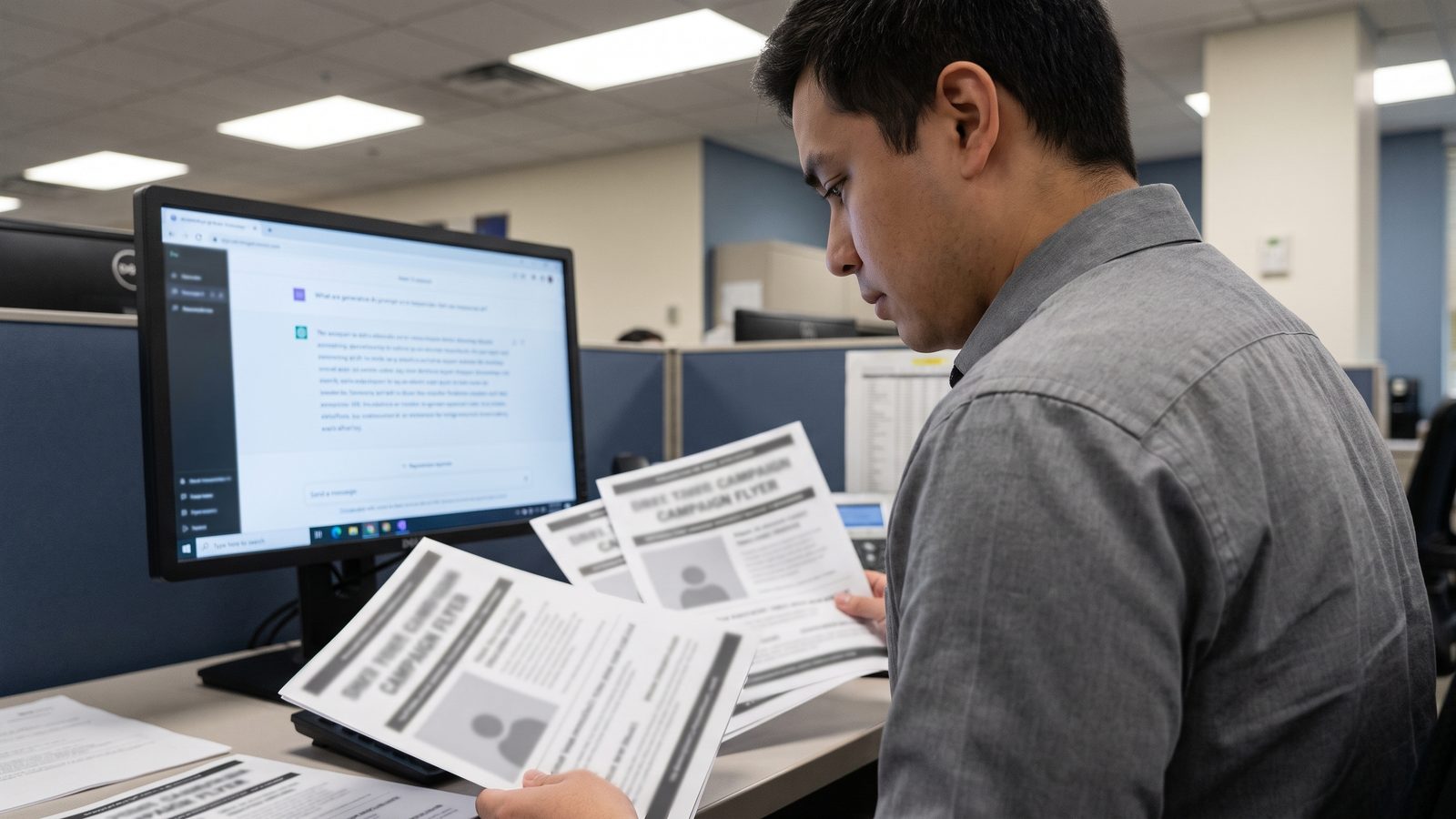
On August 20, 2026, the Office of Special Counsel filed a disciplinary complaint alleging a VA employee used a government-licensed Microsoft Copilot account and official VA email to build campaign flyers, for their own campaign and four others, while on duty. It's the first documented Hatch Act enforcement action involving a government AI tool, and it landed 75 days before the midterms. OSC charged a USPS employee the same week for running as a partisan candidate and soliciting contributions after a warning, so both tiers of the workforce now have a fresh enforcement example this cycle.
The rules didn't change. What changed is where the tripwires sit. This is the working guide for the 2026 cycle: what you can do, what gets people fired, and how the old statute reaches new tools.
First, Which Rulebook Are You Under?
The Hatch Act (5 U.S.C. 7321-7326) splits the workforce into two tiers.
Less-restricted (most employees, including USPS): Off duty and away from work, you may campaign, volunteer, attend rallies, donate, and post political opinions. You may never be a candidate in a partisan election, solicit political contributions, or use your official authority to influence an election.
Further-restricted: Employees of the CIA, NSA, FBI, Secret Service, DIA, ODNI, IRS Criminal Investigation, ATF law enforcement, the DOJ National Security and Criminal Divisions, MSPB, OSC, FEC, EAC, administrative law judges, and career SES members. This group cannot take an active part in partisan management or campaigns at all, on duty or off. They can still vote, donate, and express opinions privately.
Not sure which you are? OSC publishes the agency list, and its Hatch Act Unit answers individual questions at hatchact@osc.gov or (800) 854-2824. An advisory opinion in your inbox is the cheapest insurance in government.
The Four Contexts Where Everything Is Off-Limits
Under 5 U.S.C. 7324, all covered employees are barred from political activity:
- While on duty, including telework hours, and including your personal phone
- In any federal building, even off the clock, at lunch, in the break room
- In uniform or wearing official insignia
- In a government vehicle
"Political activity" means anything directed at the success or failure of a party, partisan group, or partisan candidate. A retweet counts. A Slack message counts. "I did it at lunch on my own phone" fails if you were in the building.
Social Media: The Permitted, the Prohibited, the Fired
Permitted (personal account, off duty, off premises):
- Posting your political views, sharing campaign content, following candidates
- Keeping your official title in your bio
- Candidate photos or campaign logos as cover images
Prohibited at all times, for everyone:
- Liking, sharing, or retweeting any post that solicits contributions. This is the rule employees miss most, and OSC's social media guide is explicit that it applies 24/7
- Political posts from an official agency account, or using the account in your official capacity
- Suggesting your agency endorses your views while campaigning
What enforcement actually looks like: a VA employee drew a 70-day suspension in October 2024 for sharing Facebook posts promoting partisan fundraisers. OSC received 694 new Hatch Act complaints in FY2025 and obtained 17 disciplinary actions. And as of a December 2025 OSC opinion, leaving government no longer ends exposure: OSC resumed enforcing against former employees for violations committed during service.
The AI Angle: Old Statute, New Tripwire
OSC has published no AI-specific Hatch Act guidance, no advisory opinion, no rulemaking. It didn't need any. The August 20 complaint applies two existing rules to new plumbing:
- A government-licensed AI account (Copilot, in this case) is a government resource, like your official email, and using it for campaign work is misuse regardless of when
- Creating campaign materials while on duty violates the four-context ban no matter what tool produced them
The practical read for 2026: assume every workplace AI tool logs your prompts the way your email logs your messages, because it does. Drafting a fundraising appeal in a work Copilot window at lunch is the same violation as sending it from your .gov address. If you do campaign work as a private citizen, keep it on personal devices, personal accounts, and personal time, entirely.
The same complaint batch included a USPS employee charged with running for partisan state office and soliciting contributions, a reminder that candidacy itself is the one prohibition no amount of off-duty care fixes.
The Penalty Math Is Not Symbolic
Under 5 U.S.C. 7325, the MSPB must order removal for a violation unless the Board unanimously votes that removal is unwarranted, and the reduced minimum is a 30-day suspension without pay. Section 7326's full menu: removal, grade reduction, up to 5 years' debarment from federal employment, suspension, reprimand, and a civil penalty.
For a GS-12 step 5 in the DC locality, a 30-day unpaid suspension is roughly a $9,300 hit, and that's the lenient outcome requiring a unanimous Board vote. With the 2026 general election on November 3 and primaries running through September, the season of maximum temptation is exactly now.
Your Pre-Midterm Checklist
- Know your tier. Career SES and anyone at an enforcement/intel agency: assume further-restricted and confirm with OSC.
- Audit your follows and autoshares. Anything that could auto-amplify a fundraising post is a standing risk.
- Separate devices and accounts completely if you do any volunteer campaign work.
- Never touch politics from anything government-issued or government-licensed, including AI tools.
- When in doubt, ask OSC first. Advisory opinions are free: hatchact@osc.gov, (800) 854-2824.
One last practical note: your profile photo is the one part of your social presence that should stay strictly professional year-round. If yours is a cropped vacation shot, our FedShot AI headshot tool generates an agency-bio-grade photo in a few minutes, and it's one less thing on your profile anyone can read anything into.
Frequently Asked Questions
Can federal employees post political opinions on social media?
Most can, on personal accounts, off duty, away from federal property. Universal limits: never engage with fundraising solicitations, and nothing political on duty or in the building. Further-restricted employees face tighter limits even off duty.
Does the Hatch Act apply to AI tools like Copilot or ChatGPT?
The existing rules cover them: a government-licensed AI account is a government resource. OSC's August 20, 2026 complaint against a VA employee over Copilot-created campaign flyers is the first enforcement of exactly that.
What is the penalty for a Hatch Act violation?
Presumptively removal; the MSPB can only reduce it by unanimous vote, and the floor is a 30-day unpaid suspension. Debarment up to 5 years is also on the menu.
Which federal employees are further-restricted?
Intel and enforcement agencies (CIA, NSA, FBI, Secret Service, DIA, ODNI, IRS-CI, ATF enforcement, DOJ NSD/Criminal), MSPB, OSC, FEC, EAC, ALJs, and career SES.
Can I keep my agency title in my social media bio?
Yes. The line is using the account in your official capacity for political activity or leveraging your authority to influence an election.
Related Resources
- Your Speech Rights as a Federal Employee: The First Amendment side of the line
- Recording and Filming Rights at Work: Adjacent workplace-rights rules
- FedShot AI: A professional profile photo in minutes
Sources: 5 U.S.C. 7321-7326, OSC Hatch Act guidance, OSC Social Media Quick Guide, OSC complaint announcement, Aug 20, 2026, OSC FY2025 Annual Report, MSPB Malone v. Merrick.