Last Updated: August 14, 2026 Reading Time: 8 min
Military.com reported this week on legislation that would end one of the strangest cliffs in federal benefits law: a surviving military spouse who remarries at 54 loses both survivor checks, while one who waits until 55 keeps everything. The gap between those two birthdays, for an E-7 family, is about $1.3 million.
Two Benefits, Two Agencies, One Cliff
Surviving military spouses often receive two separate checks that people mix up constantly:
SBP is the DoD annuity a retiree paid premiums for: 55% of the covered retired pay, administered by DFAS under 10 U.S.C. 1450. DIC is VA compensation for service-connected deaths: a flat $1,699.36 a month base rate in 2026, under 38 U.S.C. 1311.
Since January 2023 the two no longer offset each other. The repeal of the "widow's tax" means eligible survivors collect both in full, which also means the remarriage rule now puts both full checks on the table at once.
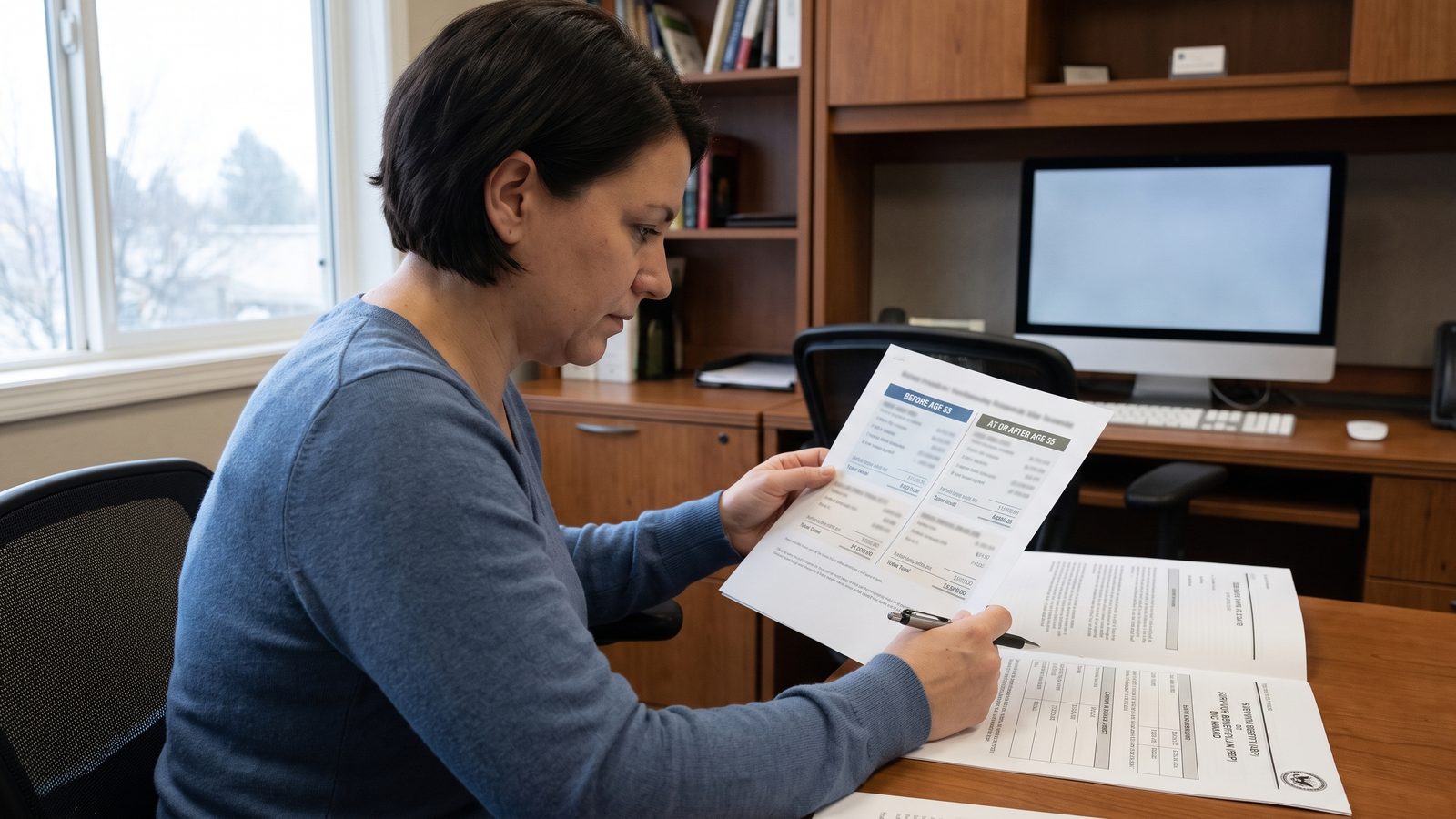
The thresholds arrived decades apart: SBP's age-55 line dates to 1986; DIC's was 57 until the Johnny Isakson Act lowered it to 55 in January 2021. Today they align: before 55, both stop; at or after 55, both continue.
What One Year Costs
FedTools computed the lifetime forfeiture for a survivor who remarries at each age and lives to 85, in 2026 dollars, excluding COLAs (which would make every number larger):
E-7, 20-year retiree: combined SBP + DIC of $3,485/month
| Age at remarriage | Years suspended | SBP forfeited | DIC forfeited | Combined |
|---|---|---|---|---|
| 45 | 40 | $856,384 | $815,693 | $1,672,077 |
| 50 | 35 | $749,836 | $713,731 | $1,463,567 |
| 54 | 31 | $664,617 | $632,321 | $1,296,938 |
| 55+ | 0 | $0 | $0 | $0 |
O-4, 20-year retiree: combined package of $4,590/month
| Age at remarriage | Years suspended | Combined forfeiture |
|---|---|---|
| 45 | 40 | $2,202,994 |
| 50 | 35 | $1,927,619 |
| 54 | 31 | $1,707,839 |
| 55+ | 0 | $0 |
FedTools original analysis, August 2026, from 2026 DFAS pay tables and VA DIC rates. Excludes COLA. Not financial advice; talk to a benefits counselor before any remarriage decision.
The table's sharpest edge is the bottom two rows. Waiting from 54 to 55 is the single most valuable year of patience in the federal benefits system.
The Fine Print That Decides Real Cases
Suspension is not termination, for SBP. If the survivor's later marriage ends in divorce or death, the SBP annuity can resume. But DFAS does not watch court records: the survivor must send written notice with the decree or death certificate. Families lose months of payments not knowing this.
DIC restoration has its own path. A survivor whose disqualifying marriage later ends applies through VA Form 21P-534EZ to have DIC restored.
TRICARE is stricter than both. Remarriage ends TRICARE coverage at any age, including after 55, and current law provides no restoration even if the later marriage ends. A surviving spouse who keeps SBP and DIC by remarrying at 56 still loses the health coverage.
Remarriage at 55+ requires reporting anyway. Keeping the benefits doesn't mean skipping the paperwork; both DFAS and VA expect notification of marital-status changes.
The Love Lives On Act: Closer Than Most Bills Get
H.R. 1004 (Rep. Richard Hudson) and S. 410 (Sen. Jerry Moran) would remove remarriage, at any age, as a basis for terminating SBP, DIC, and related survivor benefits, and would fix the TRICARE restoration gap.
Unlike most benefits bills we track, this one is moving. S. 410 passed the Senate Veterans' Affairs Committee unanimously on March 18, 2026, and the House companion advanced from subcommittee days later. CBO scores the retroactive restoration at about 4,750 survivors, with roughly 250 newly affected each year. Advocacy groups frame the stakes bigger, around 50,000 DIC recipients currently under 55 who could someday face the choice; both figures are accurate measurements of different populations.
Until a signed law says otherwise, the age-55 line is the law. A survivor planning a wedding this fall should plan around the rules as they exist, not the bill as it might pass.
What a Surviving Spouse Should Check Before Remarrying
- Your age against the 55 line, using the wedding date, not the engagement.
- Your actual combined monthly benefit (SBP statement from DFAS myPay + VA award letter), so the decision is made on your numbers, not a table's archetype.
- TRICARE consequences at any age, including 55+.
- The reinstatement mechanics, in case a later marriage ends: written notice to DFAS for SBP, VA 21P-534EZ for DIC.
- The bill's status at congress.gov, if timing is flexible.
Model the SBP side of your household's numbers with the free SBP Calculator.
Frequently Asked Questions
Do I lose SBP and DIC if I remarry at 56?
No. Both continue at 55 or older. TRICARE ends regardless of age, though.
Can benefits come back if my new marriage ends?
SBP and DIC can be reinstated, with written notice to DFAS and a VA application respectively. TRICARE cannot, under current law.
What is the exact dollar cost of remarrying at 54?
On our E-7 archetype, about $1.3 million to age 85; O-4, about $1.7 million. Your own numbers come from your SBP statement and VA award letter.
Is the Love Lives On Act law yet?
No. It has cleared the Senate committee unanimously and moved in the House, but nothing changes until it passes both chambers and is signed.
Does the SBP-DIC offset still reduce my payments?
No. The offset was fully repealed effective January 2023; survivors receive both in full.
Related Resources
- SBP Calculator: Premiums and payouts for your covered base
- SBP vs Life Insurance: The election decision at retirement
- SBP Survivor Annuity Filing Guide: The claims process after a death
- Military Retiree 2027 COLA: How survivor benefits adjust each year