Last Updated: October 4, 2026 Reading Time: 8 min
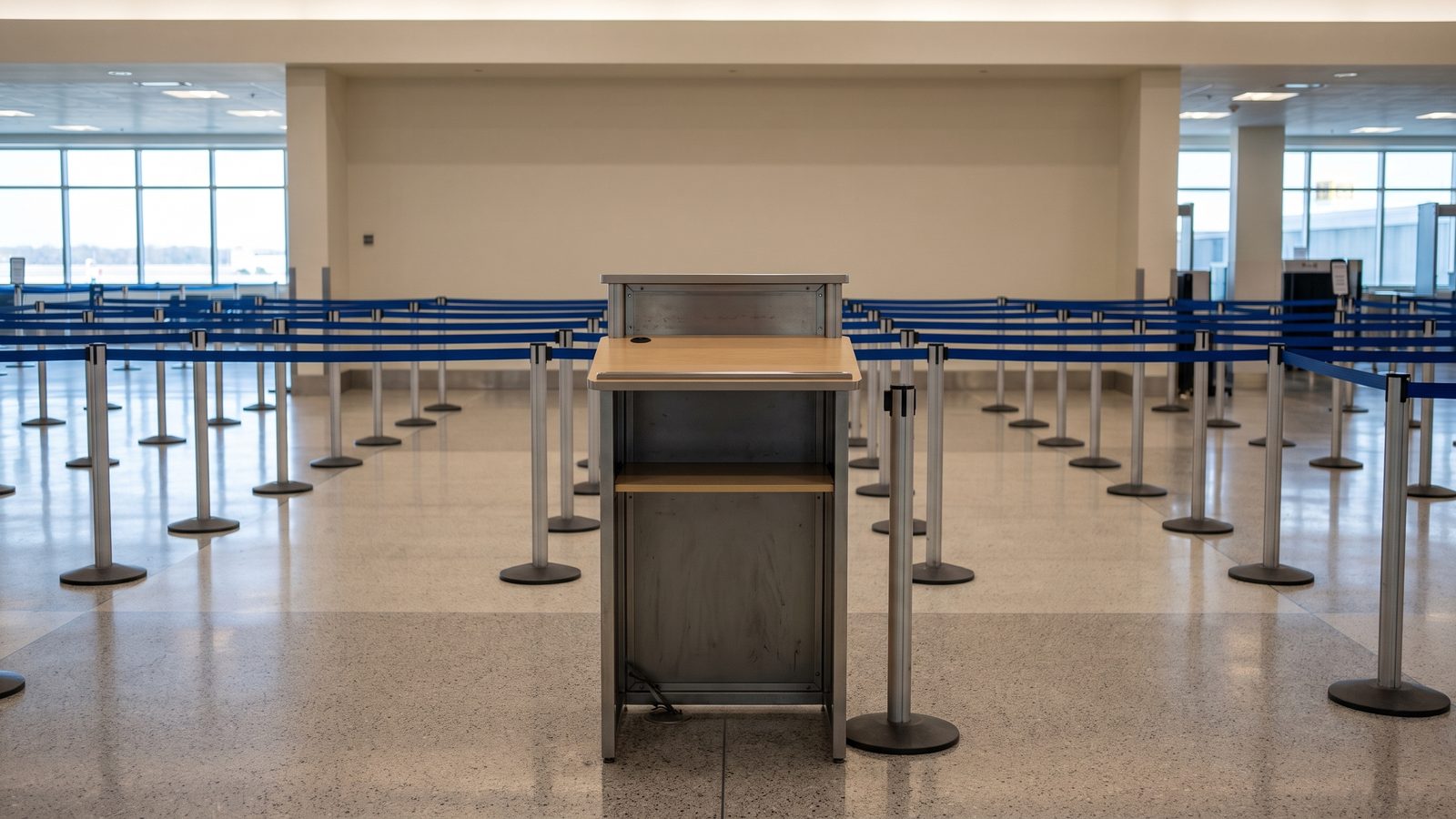
Officers checking IDs at the checkpoint entrance will now stand, according to press reports of a TSA statement. For a Transportation Security Officer with a bad knee or back, the first question is what can be done about it. The route most people think of, a disability lawsuit, is closed to screeners. Four others are open.
| Route | Open to screeners? | Authority | What it can get you | Clock |
|---|---|---|---|---|
| Rehabilitation Act lawsuit | No. Five federal appeals courts have said so | Aviation and Transportation Security Act; Joren, Field, Galaza | Nothing. A screener who could not stand for long periods lost | Not applicable |
| TSA reasonable accommodation request | Yes, unless TSA finds you cannot meet the position's statutory requirements | TSA Management Directive 1100.73-4 | A stool or another accommodation, with an interim one while the request is decided | "Timely." The day count is in a separate TSA handbook |
| Union grievance or bargaining | Yes, for bargaining-unit officers, as of the January 15, 2026 order (no later order found as of October 4) | 2024 TSA and AFGE contract; January 15, 2026 court order | Enforcement of working conditions the contract guarantees | Set by the contract. Ask your steward |
| Hazard report | Yes | 29 CFR 1960.28 | An agency inspection or a written answer. No rule requires seating | When an inspection is required, within 20 working days for a non-serious condition |
| Workers' compensation (FECA) | Yes | 5 U.S.C. 8102 and 8122 | Medical and wage-loss benefits for a work-caused condition | Usually within 3 years of the injury, or of when you knew it was work-related. Continuing exposure can restart the clock |
FedTools analysis, October 4, 2026. An administrative EEO complaint is a sixth possibility, and whether it is available to screeners is contested. See below.
What Is Confirmed About the Change
There is no public TSA directive, memo or press release. What exists is two statements relayed by news outlets on September 29, 2026.
TSA told reporters the change keeps officers "on their feet and alert," according to Reuters.
According to AFGE TSA Council 100, the union that represents officers, chairs at travel document checker podiums are being removed at most commercial airports, and the union received no formal notice. That statement was reported by Scripps News.
We checked TSA's press release list from September 9 through October 2, 2026 and found nothing about chairs, seating or standing. Other checkpoint positions were not named in either statement. Some coverage describes officers standing 8 to 12 hours on concrete. We could not find that figure in any statement from TSA or the union.
Why a Disability Lawsuit Is Not Available
The Aviation and Transportation Security Act lets TSA set screeners' terms and conditions of employment "notwithstanding any other provision of law." Courts have read that clause to override the Rehabilitation Act, the law that requires federal agencies to accommodate employees with disabilities.
- The Seventh Circuit held in Joren v. Napolitano (2011) that the Act preempts Rehabilitation Act claims by security screeners.
- The First Circuit reached the same result in Field v. Napolitano (2011). That case involved a screener with a medical condition who could not stand for long periods.
- The Ninth Circuit joined in 2023, writing that it was joining the First, Fifth, Seventh and Eleventh Circuits.
We found no appeals court that has ruled the other way.
The Equal Employment Opportunity Commission has said, in an informal 2015 letter, that screener complaints get a case-by-case look. Courts have uniformly barred the lawsuits. That leaves the administrative EEO route contested for screeners. Ask the union or an attorney before relying on it.
"Fitness for Duty" Does Not Mean Standing
The phrase comes from the screener statute, 49 U.S.C. 44935. It requires screeners to demonstrate daily fitness for duty "without any impairment due to illegal drugs, sleep deprivation, medication, or alcohol."
The statute's list of physical abilities names color perception, visual and aural acuity, physical coordination and motor skills. Prolonged standing is not on it. TSA's own medical standards and job analysis may say more than the statute does.
The Four Routes That Are Open
1. Ask TSA for an accommodation
TSA Management Directive 1100.73-4, dated February 24, 2025, applies to all TSA employees. It says Transportation Security Officers are not precluded from requesting an accommodation. The one group it excludes is officers who are unable to meet the statutory requirements of the position.
What the directive requires:
- You tell your supervisor or another receiving official.
- Supervisors must forward the request promptly to TSA's Reasonable Accommodation Program Manager.
- Supervisors must provide an interim accommodation until the program manager decides.
- If the request is denied, you can ask the Assistant Administrator for Human Capital to reconsider.
The directive promises timely review and does not state a number of days. The procedures are in a separate TSA handbook. The program's address is ReasonableAccommodation@tsa.dhs.gov.
The directive is agency policy, and a screener cannot go to court to enforce it. You can request a stool, and TSA decides.
2. Go through the union contract
On January 15, 2026, a federal judge in Seattle ordered TSA to tell officers that the 2024 collective bargaining agreement "remains applicable and binding." The underlying injunction bars TSA from denying bargaining-unit officers rights and working conditions the contract guarantees. TSA had asked the court to dissolve the injunction, and as of that order the request was not yet ready for decision.
We found no later order changing that status as of October 4, 2026.
TSA's 2024 announcement of the contract says it includes grievance and arbitration procedures and procedures for bargaining over the impact of changes. We could not retrieve the contract's text, so we cannot tell you whether it addresses seating or how many days you have to file a grievance. Your steward can, so ask this week.
3. File a hazard report
Federal employees can report unsafe or unhealthful working conditions under 29 CFR 1960.28. When an inspection is required, the agency must do it within 24 hours for an imminent danger, 3 working days for a potentially serious condition, and 20 working days for other conditions. Under 29 CFR 1960.28(d), the agency can skip the inspection if it fixes the hazard promptly, and if it finds no reasonable grounds to inspect it must tell you so in writing within 15 days. You can ask that your name be withheld.
No OSHA standard requires seating. The agency's general duty is to keep the workplace free of recognized hazards likely to cause death or serious physical harm.
| If you file on | Inspection due if required (potentially serious) | Inspection due if required (other conditions) |
|---|---|---|
| Monday, October 5, 2026 | Thursday, October 8 | Tuesday, November 3 |
| Friday, October 9, 2026 | Thursday, October 15 | Monday, November 9 |
FedTools calculation. Working days exclude Saturdays, Sundays and federal holidays (Columbus Day, October 12, and Veterans Day, November 11).
4. File a workers' compensation claim if you are hurt
The Federal Employees' Compensation Act covers federal employees, including TSOs, for disability from an injury sustained in the performance of duty.
- A condition that develops over more than one shift, such as foot, knee or back trouble from weeks of standing, is an occupational disease. Use Form CA-2.
- An injury from a single shift is a traumatic injury. Use Form CA-1.
- You usually have 3 years to file. For a condition that develops gradually, the 3 years start when you know, or reasonably should know, that it is related to your work. Under 5 U.S.C. 8122, continuing exposure can move that start to your last exposure, and a supervisor's actual knowledge or your written notice within 30 days can save a late claim.
What to Do This Week
- Write down your symptoms with dates and the hours you worked. This supports an accommodation request and marks when you became aware of a work-related condition.
- Request an accommodation in writing. A dated email to your supervisor, copied to the reasonable accommodation address above, shows when you asked. Ask for the interim accommodation the directive describes.
- If you are denied, ask for reconsideration by the Assistant Administrator for Human Capital.
- Talk to your AFGE steward about a grievance and about the contract's filing deadline.
- File a written hazard report through your airport's safety channel if you believe the condition is unsafe.
- If you are injured, file a CA-2 or CA-1.
For how accommodation requests work for other federal employees, who are covered by the Rehabilitation Act, see our reasonable accommodation rights guide.
Frequently Asked Questions
Did TSA issue a written rule banning chairs?
No written directive has been made public. News outlets reported on September 29, 2026 that a TSA spokesperson confirmed the change and said it keeps officers on their feet and alert. We have not seen the statement itself. TSA's press release page had nothing on seating as of October 2, 2026.
Which TSA officers are affected by the no-sitting change?
As reported, the change covers the travel document checker position at the checkpoint entrance. Scripps News quotes AFGE TSA Council 100 as saying chairs are being removed at most commercial airports. Other checkpoint positions were not named in the reporting we found, and we have not seen either original statement.
Does fitness for duty mean a TSO has to be able to stand all shift?
Not in the statute. Under 49 U.S.C. 44935, fitness for duty means working without impairment from illegal drugs, sleep deprivation, medication or alcohol. The statute's physical list names vision, hearing, coordination and motor skills, and does not mention prolonged standing.
Can a TSO sue TSA under the Rehabilitation Act?
No. Five federal appeals courts, most recently the Ninth Circuit in 2023, have held that the Aviation and Transportation Security Act bars Rehabilitation Act lawsuits by screeners. One of those cases involved a screener who could not stand for long periods.
Can a TSO still ask for a stool as an accommodation?
Yes. TSA Management Directive 1100.73-4 applies to all TSA employees and says TSOs are not precluded from requesting an accommodation. Only officers unable to meet the position's statutory requirements are ineligible. TSA makes the decision, and a screener cannot sue over a denial.
How does a TSO request an accommodation, and how long does TSA have?
Tell your supervisor, preferably in writing. The directive requires supervisors to forward the request promptly to the Reasonable Accommodation Program Manager and to provide an interim accommodation until a decision. The directive promises timely review. The specific number of days is in a separate TSA handbook.
Is the TSA union contract still in effect?
A federal judge ruled on January 15, 2026 that the 2024 contract between TSA and AFGE "remains applicable and binding." We found no later court order changing that as of October 4, 2026. Ask your steward about the grievance deadline.
Can a TSO file a safety complaint about standing?
Yes. Federal employees can report unsafe or unhealthful conditions under 29 CFR 1960.28, and can ask that their name be withheld. When an inspection is required, the agency has 20 working days for a condition that is not serious. It can instead fix the problem promptly, or tell you in writing within 15 days that it found no reasonable grounds to inspect. No OSHA standard requires seating.
What if standing all shift injures me?
File a claim under the Federal Employees' Compensation Act. A condition that develops over more than one shift is an occupational disease, filed on Form CA-2. The usual limit is 3 years from when you knew, or reasonably should have known, that the condition was related to your work. If the exposure continues, the clock can run from your last exposure, and a late claim can still be payable if your immediate supervisor had actual knowledge, or you gave written notice, within 30 days.
Related Resources
- Federal Reasonable Accommodation Rights: How the process works under the Rehabilitation Act for most federal employees.
- When an Accommodation Request Is Delayed: Steps when an agency does not answer.
- TSA Privatization and Your Benefits: What a move to contract screening would change.
Sources: TSA statement of September 29, 2026 as reported by Reuters via GV Wire; AFGE TSA Council 100 statement as reported by Scripps News; TSA press releases (checked through October 2, 2026); 49 U.S.C. 44935; Joren v. Napolitano (7th Cir. 2011); Field v. Napolitano (1st Cir. 2011); Galaza v. Mayorkas (9th Cir. 2023); TSA Management Directive 1100.73-4, Reasonable Accommodation Program (February 24, 2025); Order Clarifying Preliminary Injunction, AFGE v. Noem (W.D. Wash. January 15, 2026); 29 CFR 1960.8 and 1960.28; 5 U.S.C. 8102 and 8122; 20 CFR 10.5.