Last Updated: August 14, 2026 Reading Time: 8 min
The Supreme Court settled the question in April 2025: federal employees called to active duty during a national emergency are owed differential pay without proving their duties had anything to do with the emergency. Fifteen months later, OPM's guidance still says otherwise, agencies are still denying claims, and this week two lawsuits landed to force the issue. The part missing from the lawsuit coverage: when you actually run the formula, many affected feds are owed nothing, and some are owed tens of thousands.
What the Statute Actually Pays
Since 2009, 5 U.S.C. 5538 has promised federal civilian employees on qualifying active duty the gap between the paycheck they left and the one the military pays them, for periods spent on LWOP. The fight has never been about the formula. It's been about who qualifies.
The statute lists specific activation authorities (involuntary calls under 12301(a), 12302, 12304, and relatives), then adds a catchall: activations under "any other provision of law during a national emergency." OPM read that phrase narrowly, requiring employees to prove their service was substantively connected to a specific emergency, and excluded voluntary 12301(d) activations entirely.
Nick Feliciano, an FAA air traffic controller and Coast Guard petty officer who spent years escorting vessels in Charleston Harbor, lost under that reading. The Supreme Court reversed, 5-4, Justice Gorsuch writing: "during" means during. A declared emergency in effect at activation is enough. No connection test.
The Lawsuits: Making OPM Say It
OPM's implementing guidance, written in 2009 and last revised in 2015, still carries the old exclusions. Agencies process claims from that guidance, so post-Feliciano claims are still being denied under a standard the Supreme Court struck down.
Two vehicles are now forcing the question. Colicelli v. OPM, filed August 8 by an Army Reserve major who works as a VA attorney, asks a court to compel updated regulations under the Administrative Procedure Act. And an AFGE-backed class action at the MSPB seeks back pay for affected employees, with an opt-in period open now and claims potentially reaching back to 2009, subject to the six-year limitations period for monetary claims.
If you have a denied or unfiled claim, you don't have to wait for either case: the ruling is controlling law today, and MSPB appeals can cite it directly.
Run the Math Before You Celebrate
The detail every news story skips: the military side of the comparison includes BAH and BAS, the tax-free housing and food allowances. Your civilian side is basic pay only, before locality. At a typical metro duty station, BAH alone runs $19,000 or more a year, which pushes the military total above civilian basic pay for most common pairings. A GS-11 activated as an E-6 near Washington or San Diego is almost certainly owed nothing.
The differential turns positive in specific shapes: senior civilian grade, junior military grade, or a low-BAH duty station. FedTools ran the 2026 tables at a representative rural-installation BAH of $900 a month:
| Civilian grade (step 5 base) | Military grade | Military total (basic + BAH + BAS) | Differential owed |
|---|---|---|---|
| GS-11 ($72,303) | E-4, 4 yrs | $47,410 | ~$24,893/yr |
| GS-12 ($86,659) | E-5, 6 yrs | $65,843 | ~$20,816/yr |
| GS-13 ($103,049) | E-7, 12 yrs | $80,128 | ~$22,921/yr |
| GS-14 ($121,774) | O-3, 8 yrs | $114,728 | ~$7,046/yr |
| GS-15 ($143,236) | O-4, 12 yrs | $120,539 | ~$22,697/yr |
FedTools computation from 2026 GS base tables and 2026 military pay charts at $900/month BAH. At a $1,600/month metro BAH, none of these rows stays meaningfully positive. Your duty station's BAH rate decides your outcome.
That last line deserves repeating: your BAH rate, not your rank, is usually the deciding variable. The same GS-12 owed $20,000 at Fort McCoy is owed nothing at a coastal metro base.
How to Claim, Step by Step
- Confirm your activation authority from your orders: an enumerated authority, or any authority during a declared national emergency (post-9/11 counts). Annual training and drill weekends never qualify.
- Confirm you were on LWOP, not paid military leave under 6323, for the period claimed. Differential applies only to LWOP days.
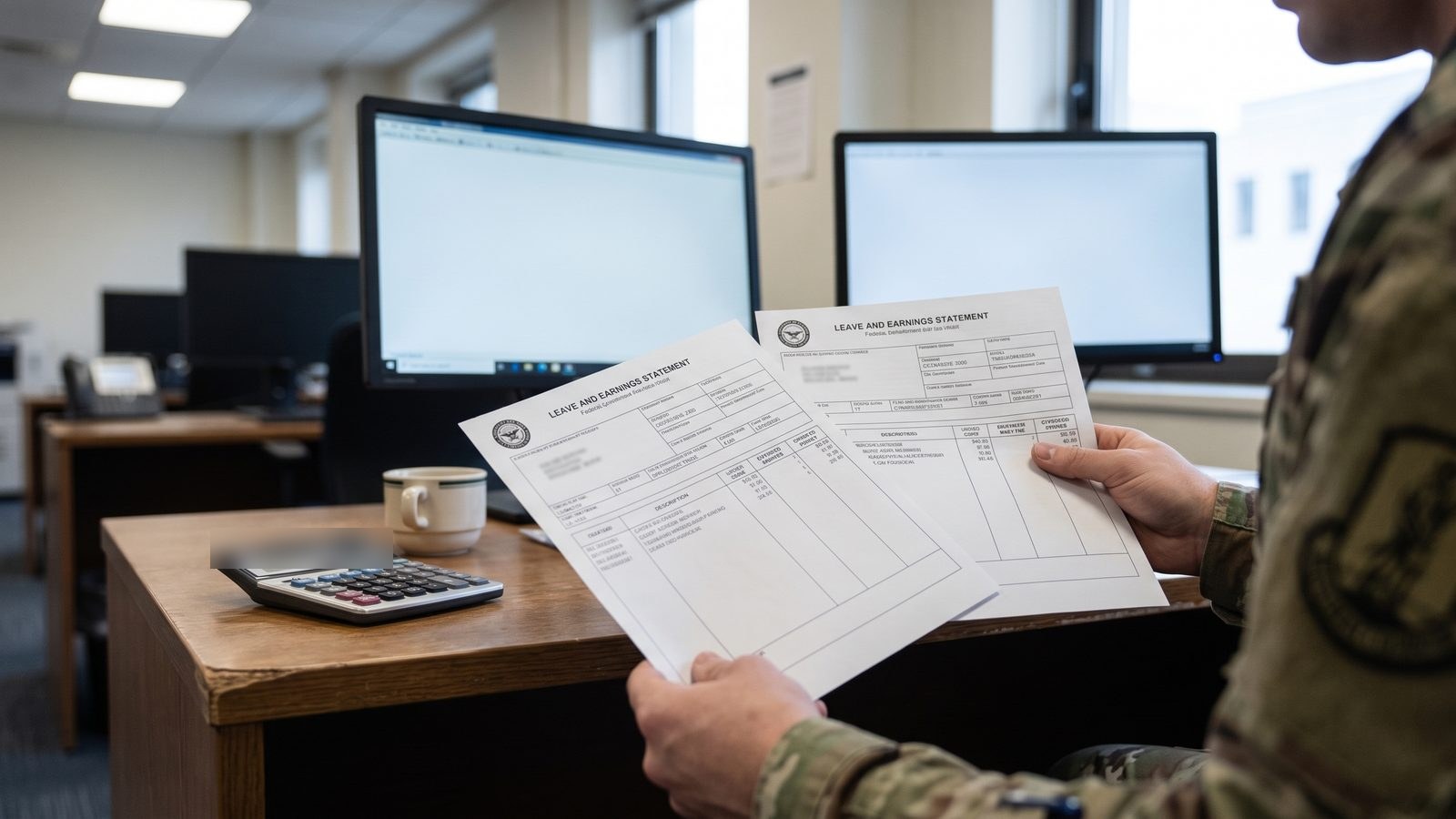
- Gather the records: orders, monthly LES, and civilian pay records for the same period.
- File with your civilian agency HR office, citing Feliciano v. Department of Transportation, No. 23-861 (April 30, 2025).
- If denied, appeal to the MSPB or evaluate the class action. Denials based on the pre-Feliciano guidance are exactly what the pending cases target.
One planning note: differential pay is a special payment, not basic pay. It won't raise your high-3, TSP match, or FEHB standing. Its value is cash flow during activation, not retirement credit.
Look Up Your Own Comparison
Pull your GS base rate with the free Federal Salary Explorer, then set it against the basic pay, BAH, and BAS lines on your LES. If civilian basic exceeds the military total, the gap is what 5538 owes you per year of qualifying LWOP.
Frequently Asked Questions
Who qualifies after Feliciano?
Anyone activated under an enumerated authority, plus anyone activated under any other authority, including voluntary 12301(d), while a national emergency was declared. That covers essentially all activations since September 2001.
Why is OPM being sued?
Its guidance still reflects the standard the Supreme Court rejected, and agencies keep denying claims from it.
How far back can claims reach?
The class action seeks recovery potentially to 2009, bounded by the six-year limitations period for monetary claims against the government.
Why might I be owed nothing?
Because BAH and BAS count on the military side. High-BAH duty stations usually erase the differential.
Where do I file?
Your civilian agency HR office, not your military chain of command. MSPB is the appeal path.
Related Resources
- Military Leave Under 6323: The paid-leave complement to differential pay
- USERRA Reemployment Rights: Your job protections around activation
- USERRA TSP Make-Up Contributions: Repairing retirement contributions after duty
- Federal Salary Explorer: Your GS base rate for the comparison